custom-engineered solutions
Water is often treated as a background utility in a business. It arrives through a pipe, gets used in equipment or production, and disappears down a drain. Simple enough.
Until it isn’t.
A change in water quality can affect machinery, cleaning processes, product consistency, operating expenses, and routine maintenance. For some businesses, the impact is minor. For others, a water-related problem can interrupt an entire operation.
That’s why commercial water treatment shouldn’t be approached with a one-size-fits-all mindset. Different facilities use water differently, and the right treatment strategy depends on the source, application, volume, and quality requirements.
The smartest approach usually starts with understanding the water and the job it needs to perform.
Every Business Has Different Water Requirements
A restaurant doesn’t use water in the same way as a manufacturing plant. A hotel has different requirements from a healthcare facility, while a commercial laundry has very different priorities from an office building.
Even two businesses in the same industry may have different water challenges because of their location, plumbing infrastructure, equipment, or municipal supply.
That’s where custom-engineered solutions can become valuable. Instead of forcing a property into a standard package, a treatment strategy can be developed around the facility’s actual requirements.
That might involve filtration, water softening, reverse osmosis, UV treatment, or a combination of technologies.
The point isn’t to install as much equipment as possible. It’s to install what actually solves the problem.
Start With Water Testing
Before choosing treatment equipment, it helps to know what’s in the water.
Testing can reveal characteristics such as hardness, pH, chlorine, iron, sediment, dissolved solids, and other substances. For businesses using private wells, regular testing can be especially important because groundwater quality can change over time.
Testing also helps separate real problems from assumptions.
Maybe a facility has scale buildup and assumes it needs a complex filtration system. Testing may show that hardness is the primary issue, meaning a properly sized softener could be more appropriate.
Or perhaps the concern is chlorine affecting a particular process. In that case, carbon filtration might be the better solution.
Good treatment begins with good information.
Matching Technology to the Application
Water treatment technologies aren’t interchangeable.
A sediment filter can remove suspended particles but isn’t designed to solve every dissolved-contaminant problem. Carbon filtration can improve taste and reduce certain chemicals. Water softeners address hardness minerals, while reverse osmosis can reduce many dissolved substances.
UV systems work differently again, using ultraviolet light to help control microorganisms without adding chemicals to the water.
The right combination depends heavily on the industry’s specific needs.
For example, a food-service operation may care about taste, hardness, and equipment protection. A manufacturing facility may need consistent water characteristics for a production process. A commercial laundry may be particularly concerned about hardness because mineral-rich water can affect cleaning performance and equipment.
There’s no universal answer because there isn’t a universal application.
Protecting Expensive Equipment
Commercial equipment can represent a significant investment.
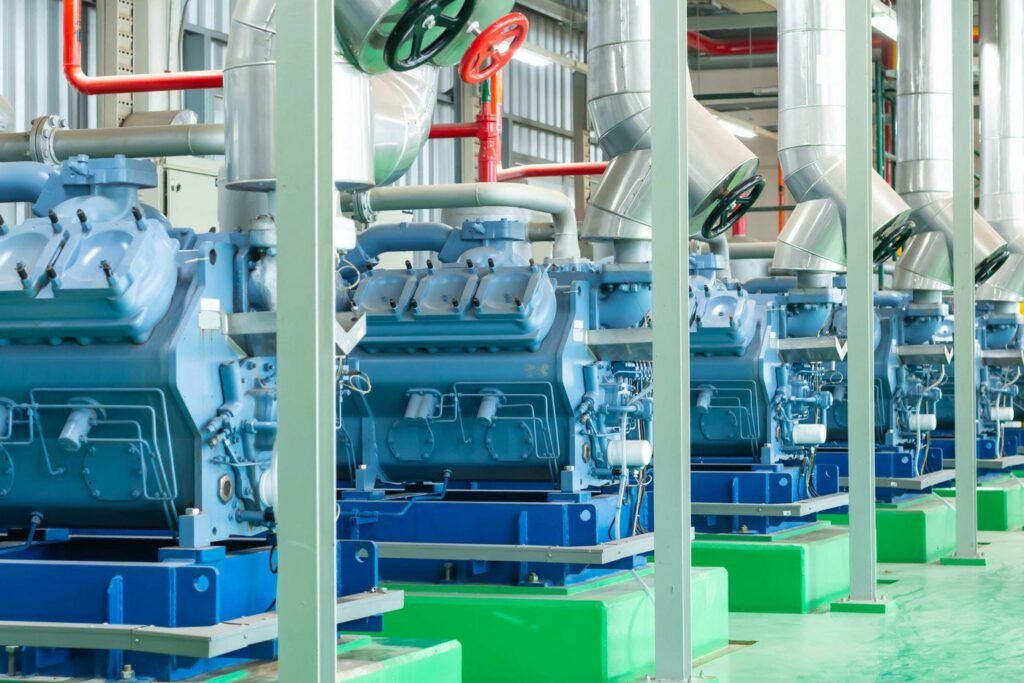
Boilers, water heaters, dishwashers, cooling systems, heat exchangers, washing equipment, and production machinery may all depend on water that meets certain requirements.
Hard water is a common concern because calcium and magnesium can form scale on surfaces, particularly where water is heated.
That buildup can reduce efficiency and increase maintenance requirements over time.
The problem tends to develop gradually, which makes it easy to overlook. A little scale today doesn’t seem serious. After months or years, however, the accumulated effect can become much harder to ignore.
Water treatment can help reduce avoidable stress on equipment when the treatment technology is correctly matched to the water.
Efficiency Matters to the Bottom Line
Commercial water treatment isn’t only about water quality. It’s also about operating costs.
A system that consumes excessive water, electricity, salt, or replacement media may become expensive to operate, even if the initial installation price was attractive.
When evaluating equipment, businesses should consider total ownership costs rather than focusing only on the purchase price.
That includes installation, consumables, maintenance, energy use, wastewater, replacement components, and expected service life.
A system that costs slightly more upfront may make sense if it operates efficiently and requires less intervention over time.
Numbers matter here. So does reliability.
Planning for Changing Demand
Business operations rarely stay exactly the same forever.
A restaurant may add another kitchen. A hotel may expand. A manufacturing facility might increase production. A commercial laundry could take on new customers.
Water demand can change along with those developments.
A well-planned treatment system should take future requirements into consideration without unnecessarily oversizing equipment from day one.
Scalable designs can provide flexibility when water demand increases. Modular equipment may allow additional treatment capacity to be added later, depending on the system.
Planning ahead doesn’t mean predicting the future perfectly. It simply means leaving some room for reality.
Installation Is Part of the Solution
Even excellent equipment can underperform if it’s installed incorrectly.
Commercial systems may involve complex plumbing connections, pumps, controls, drainage, electrical requirements, pressure considerations, and multiple treatment stages.
Installation needs to account for the existing infrastructure as well as the new equipment.
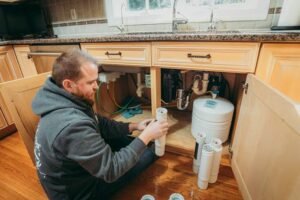
Accessibility matters too. Filters and valves should be positioned where technicians can reach them without disrupting the entire operation.
Good installation is rarely something customers notice. Poor installation, unfortunately, tends to make itself known.
Ongoing Support Keeps Things Moving
The relationship shouldn’t end when the equipment is installed.
Commercial facilities benefit from ongoing service & support because treatment systems require maintenance, replacement parts, monitoring, and occasional troubleshooting.
Scheduled service can help identify developing issues before they become emergency repairs. It can also make filter and membrane replacement more predictable.
For businesses that depend heavily on water, having knowledgeable support available can provide peace of mind.
After all, nobody wants to discover a treatment problem at 7 a.m. on the busiest day of the month.
Don’t Overlook Preventive Maintenance
Preventive maintenance is one of the simplest ways to protect a treatment investment.
Filters should be replaced according to their service requirements. Softener components need inspection. Pumps, valves, tanks, and control systems may require periodic attention.
Businesses should keep records of maintenance and monitor changes in pressure, water quality, flow, and equipment performance.
A sudden change can be an early warning sign.
Waiting until a system completely fails is rarely the most economical maintenance strategy.
Choosing the Right Water Treatment Partner
When evaluating a commercial water treatment provider, look beyond equipment brochures.
Ask whether the provider tests water, understands your application, offers appropriate installation, provides maintenance, and can support the system after commissioning.
Ask about warranties, replacement parts, response times, and service schedules.
Most importantly, make sure they understand the reason you’re treating the water in the first place.
The best provider isn’t necessarily the one selling the most sophisticated equipment. It’s the one that understands your operation and builds a practical solution around it.
A Better Approach to Commercial Water
Water treatment works best when it’s treated as part of the business operation rather than an afterthought.
Test the water. Understand how it’s being used. Identify the risks, choose appropriate technology, and plan for maintenance from the beginning.
Whether the goal is protecting equipment, improving process consistency, reducing scale, or maintaining dependable water quality, a thoughtful treatment strategy can make a meaningful difference.
The right system should quietly support the business—not become another problem to manage.
And when the engineering, installation, and service all work together, that’s exactly what happens: better water, better equipment protection, and one less thing standing in the way of getting the job done.