lab water analysis steps
There’s a certain moment that catches people off guard. You finally decide to test your water, maybe out of curiosity, maybe because something feels slightly off—and then the report arrives.
Pages of numbers. Technical terms. Units you haven’t seen since school.
At first glance, it can feel like you’ve opened a document meant for someone else entirely. But here’s the thing: it’s not as complicated as it looks. Once you slow down and look at it piece by piece, it starts to make sense.
And more importantly, it starts to feel useful.
Why Testing Your Water Is Only Half the Story
Getting your water tested is a great first step. It tells you what’s present, what’s within acceptable limits, and what might need attention.
But the real value comes afterward.
Because a report on its own doesn’t fix anything. It just gives you information. What matters is how you use that information—how you turn it into something practical for your home.
That’s where many people get stuck. Not because the process is too complex, but because no one really explains what to do next.
Understanding the Basics Without Getting Lost in the Details
Most water reports follow a similar structure. You’ll see a list of parameters—things like pH, hardness, iron levels, maybe chlorine or nitrates. Each one comes with a number and, often, a recommended range.
It’s tempting to try and understand every single value, but you don’t need to.
Start by looking for anything that stands out. Are there levels above the suggested limits? Are there elements that match what you’ve been noticing—like taste, smell, or staining?
Even a quick scan can tell you more than you think.
The Process Behind the Report Matters Too
It’s easy to focus only on the results, but how those results were obtained is just as important.
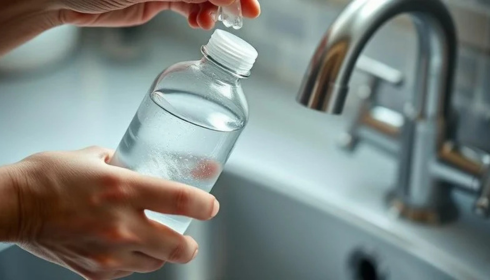
Reliable testing usually follows specific lab water analysis steps—from proper sample collection to controlled testing environments. These steps ensure that what you’re seeing on paper actually reflects what’s in your water.
If sampling wasn’t done correctly, or if the testing process wasn’t consistent, the results can be misleading.
So while it might feel like a small detail, understanding that there’s a structured process behind your report can help you trust the information you’re working with.
Learning to Read Between the Numbers
Once you get past the initial overwhelm, the next challenge is figuring out what the numbers actually mean for you.
This is where you start to interpret results in a practical way.
For example, slightly elevated hardness might explain why your soap doesn’t lather well. Higher iron levels could be behind those reddish stains in your sink. Chlorine levels might connect to that taste you’ve been noticing.
It’s not about memorizing standards or comparing every value to a chart. It’s about connecting the data to your real-life experience.
And once you do that, the report starts to feel less like a technical document and more like a guide.
Turning Information Into Something Useful
This is the part that really matters.
You’ve tested your water. You’ve looked at the results. Now what?
The goal isn’t to fix everything at once. It’s to identify what actually needs attention.
That’s where actionable treatment advice comes into play. Instead of chasing every possible improvement, you focus on solutions that address your specific concerns.
If hardness is high, a softener might help. If chlorine is affecting taste, a carbon filter could make a difference. If sediment is present, a simple pre-filter might be enough.
It doesn’t have to be complicated. In fact, simpler solutions often work best.
Avoiding the Trap of Overcorrection
One thing people often do after seeing a water report is overreact.
They see a few numbers outside the ideal range and immediately start looking for the most advanced, all-in-one system available. But more isn’t always better.
Water treatment works best when it’s targeted. Address the issues that matter. Leave the rest alone unless there’s a clear reason to act.
Because at the end of the day, your goal isn’t to create perfect water—it’s to create water that works well for your home.
Living With Better Water Feels Surprisingly Normal
Here’s something people don’t always expect.
After you make improvements based on your water report, the changes don’t feel dramatic. They feel… natural.
Your water tastes better, but you stop thinking about it. Your appliances run more smoothly, but you don’t constantly check them. Your routines just feel easier.
And over time, that becomes your new normal.
Which, honestly, is the best outcome you could ask for.
Maintenance and Retesting: Keeping It Simple
Water quality isn’t static. It can change over time, depending on your source, your plumbing, and even seasonal factors.
That’s why occasional retesting makes sense. Not frequently, not obsessively—just enough to stay informed.
And if you’ve installed any treatment systems, basic maintenance will keep them working effectively. Filter changes, occasional checks—it’s all manageable.
Nothing complicated, nothing overwhelming.
In the End, It’s About Confidence, Not Perfection
A water report might look intimidating at first, but it’s really just a tool.
It gives you insight into something you use every single day. It helps you make decisions based on facts instead of assumptions. And it gives you a level of confidence that’s hard to get any other way.
You don’t need to understand every detail. You don’t need to fix every number.
You just need to take what’s relevant, make thoughtful choices, and move forward.
Because when you know what’s in your water—and what to do about it—you’re no longer guessing.
You’re in control.