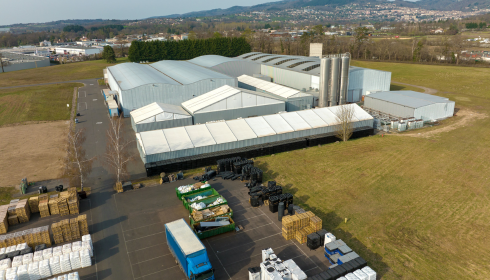
What does it take for a recycling plant in India to match global benchmarks?
Today, it is not just about managing waste. It is about precision, technology, and the ability to convert scrap into high-quality industrial materials. Across India, advanced facilities are redefining recycling by focusing on efficiency, sustainability and circular economy principles.
From aluminium recycling and plastic recovery to integrated metal processing and waste-to-energy systems, these plants are setting new standards for the future.
1. Banyan Nation, Hyderabad
Banyan Nation is one of India’s most advanced plastic recycling facilities, known for its technology-led approach.
This recycling plant in India processes HDPE and polypropylene (PP) waste into high-quality recycled plastic granules that match virgin material standards. Its vertically integrated model ensures traceability and consistency, making it a preferred partner for leading FMCG brands.
The company sets a benchmark for how a modern scrap recycling company can combine technology with sustainability.
2. PerPETual Global (Indorama Ventures)
PerPETual Global, part of Indorama Ventures, is redefining plastic recycling through chemical innovation.
Using advanced depolymerisation technology, this facility breaks down PET plastic into its core chemical components and rebuilds it into high-grade recycled PET (rPET). This ensures superior quality and global compliance for packaging and textile applications.
It represents the next evolution of recycling where science meets scalability.
3. Gummidipoondi, Tamil Nadu
Jain Resource Recycling represents one of the most advanced integrated metal recycling setups in India.
The Group operates high-capacity non-ferrous metal recycling facilities primarily in Gummidipoondi, Tamil Nadu, within the SIPCOT Industrial Complex. These facilities are designed to handle diverse materials including copper, aluminium, lead and plastics.
This recycling plant in India combines automated processing with end-to-end capabilities, producing copper billets, aluminium alloys, and plastic granules with a strong focus on zero-landfill operations. Its integrated approach across aluminium recycling, lead recycling plant processes, and copper recovery ensures both scale and consistency, making it a benchmark for how organised recycling infrastructure should function in India.
4. Indore Waste-to-Energy Plant
Indore’s waste-to-energy plant is a benchmark in municipal solid waste management.
Processing over 1,200 tonnes of waste daily, this facility converts city waste into electricity while significantly reducing landfill dependency. Its success lies in integrating technology with strong civic systems and operational discipline.
While it operates at a city scale, it reflects how advanced recycling plants in India can drive both environmental and urban impact.
5. FR Engimech Private Limited, Ahmedabad
FR Engimech specialises in advanced solid waste recycling systems and infrastructure.
Its plants use high-performance sorting technologies such as trommels and automated separators, capable of handling waste volumes from 30 TPD to 1500 TPD. These systems significantly improve segregation efficiency, which is critical for downstream recycling processes.
By strengthening the foundation of waste sorting, the company plays a key role in improving the performance of recycling ecosystems across India.
What Makes These Plants World-Class
These leading facilities share common strengths:
👉 Advanced technology integration for better recovery
👉 Scalable operations handling diverse waste streams
👉 Compliance with global environmental standards
👉 Focus on circular economy principles
Whether it is plastic, municipal waste, or metals like those processed through aluminium recycling and lead recycling plants, the emphasis is on efficiency, sustainability, and quality.
The Bigger Picture
India’s recycling sector is undergoing a structural transformation, from fragmented operations to organised, technology-driven systems.
From innovation-led plastic recycling to integrated metal processing and large-scale urban waste solutions, these plants are setting global standards. As industries increasingly rely on recycled materials, the role of organised scrap recycling company models will only grow stronger.
Together, these efforts are shaping a future where waste is no longer discarded, but transformed into a valuable resource powering India’s circular economy.
